
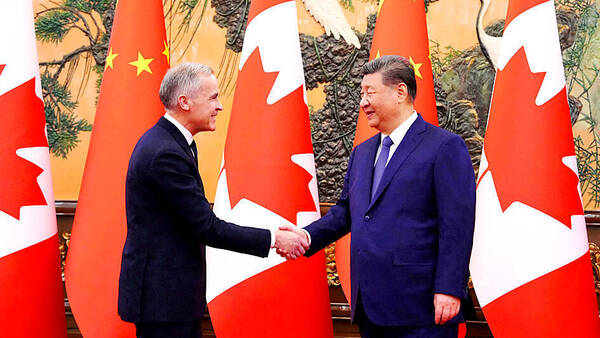
加拿大与中国达成了新的贸易协议,这一消息让我震惊,同时也迅速引发了激烈的公众反应。最初的关注点集中在该协议的范围与内容上,包括开辟汽车市场、新的商业渠道,以及贸易额增长等。然而,在细节流出的同时人们还意识到,相比具体数字,时机才是更关键的因素。加拿大是在一个较为危机的时刻推进这些协议的:它正在不断承受着来自其最近邻、最大贸易伙伴、也是长期地缘政治盟友,美国的经济与地缘政治压力。
The news of Canada’s new trade agreements with China jolted me and quickly ignited a heated public reaction. Early discussion focused on the scope of the deals — expanded market access, new commercial channels, and the promise of increased trade volumes. But almost as soon as the details emerged, it became clear that timing mattered more than the numbers. Canada is entering these agreements at a moment of acute vulnerability, under sustained economic and geopolitical pressure from its closest neighbour, largest trading partner, and long-standing ally, the United States.
在特朗普执政的一年多时间里,加拿大一直在应对一种前所未有、令人不安的现实:贸易不再是合作的工具,而日益成为施压与胁迫的手段。美国将关税当作筹码,反复用以施压和威胁加拿大经济,几乎不再顾及盟友之间应有的基本规范或既有条约义务。供应链因此受到冲击并被扰乱,就连围绕加拿大的表述方式也发生了变化——在言辞之中,加拿大从伙伴变成依附者,从盟友滑向近乎从属的地位。曾经令人安心的稳固经济关系,如今越来越像是一种被用来施压的杠杆。
For more than a year under Donald Trump’s administration, Canada has been grappling with a new and unsettling reality. Trade has become an instrument of coercion rather than cooperation. Tariffs have been imposed, threatened, and dangled with little regard for alliance norms or treaty obligations. Supply chains have been destabilized. Even the language surrounding Canada has shifted — from partner to dependent, from ally to something closer to a subordinate. What once felt like a secure economic relationship has begun to resemble leverage.
但问题并不止于金钱和贸易数字。当经济压力伴随着对某国独立性不屑一顾的言辞出现时,略势的加国不可能再将其简单视为虚张声势。历史经验一再表明,贸易施压往往是政治施压的第一步。对加拿大而言,维持美加关系长期以来所依赖的一个前提是,美国的行动会自我约束,保持克制;而这一前提的消失则深深令人不安。渥太华迫切地在美国之外寻找新的经贸机会的决定也就不足为奇了。
But the concern goes beyond dollars and trade balances. When economic pressure is paired with language that questions a country’s independence, smaller nations cannot simply shrug it off as empty talk. History shows that trade pressure is often the first step toward political pressure. For Canada, which has long depended on the assumption that the United States would act with restraint, the loss of that certainty has been deeply unsettling. It helps explain why Ottawa has been urgently looking for economic opportunities beyond the U.S. market.
在这样的背景下,与中国达成的贸易协议的确让人松了一口气。中国既是一个重要的贸易市场,也是一个全球性的经济力量,与中国开展贸易,至少为加拿大打开了另一条出路。毕竟,多元化正是经济学家和战略分析人士多年来反复强调的策略。降低对单一主导性伙伴的依赖,并非意识形态选择,而是一种审慎的经济现实考量。只是,这种“松一口气”的感觉所伴随的,却是另一种连我自己都感到震惊的情绪。
Seen in that light, the China deals brought a sense of relief. Another major market. Another global power. Another option. Diversification, after all, is what economists and strategists have been urging for years. Reducing dependence on a single dominant partner is not ideological; it is prudence. And yet that relief arrived with a force that startled me.
因为中国,正是我在几十年前逃离的那个国家。
Because China is the country I fled decades ago.
在我看来,中国并不是一个中性的贸易伙伴。它的威权力量塑造了我的人生,也让我在很早的时候就体会到恐惧、沉默,以及自我审查意味着什么。近些年来,它同样成为许多华裔加拿大人心中挥之不去的焦虑来源。境外影响行动、监控、恐吓与政治施压等并非只存在于政策报告中的抽象概念,而是真实存在的生活经历,它在人们的低声交谈中被反复提起,也是能被那些深知国家权力如何跨越国界运作的人们所立即理解的话题。
China is not a neutral trading partner to me, but a state whose authoritarian power shaped my life and taught me, early on, what fear, silence, and self-censorship feel like. In recent years, it has also been a source of deep anxiety for many in the Chinese Canadian diaspora. Foreign influence operations, surveillance, intimidation, and political pressure are not abstractions discussed only in policy reports. They are lived realities, whispered about carefully, understood instinctively by those who know how power travels across borders.
正因为如此,在短暂的欣慰之后,我心中随之升起的却是一种更深的不安。而更让我震惊的是,那种带来“松了一口气”感觉的,竟然来自与中国的贸易交往——正是那个我当年曾拼命想要逃离的国家。这种震惊突如其来,毫无预兆,甚至带着一种我并不愿接受的强迫感。它让我感觉自己经历了一次道德上的错位,那些原本清晰的界线在瞬间变得模糊不清,威胁与庇护之间的分野也开始混杂,让人一时难以分辨,究竟谁在施压,谁又成了暂时的依靠。
That is what made my reaction so disturbing. I was shocked to discover that the sense of relief I felt came from engagement with this country — the very one I once fought to leave. That realization arrived suddenly, uninvited, and almost against my will. It felt like a moral reversal I was not prepared for, a moment when the familiar lines between threat and refuge blurred.
而那种”松了一口气”的感觉并非因为中国在变好,而是美国在变坏。正是这种倒置才让我感到震诧。当与一个威权国家的贸易往来,竟然在某个瞬间让人感到安心而非警惕,这并不意味着人们忘记了过去,而是说明当下的现实已经发生了多么深刻的令人不安的变化。对于我们这些曾经逃离威权统治、寄望于稳定与民主庇护的人来说,这一刻迫使我们直面一种残酷的觉醒:当“松一口气”来自本不该来自的地方和国度,它带来的不是安慰,而是一种警示,即告诫人们他们活在怎样的一个现实世界里。
My sense of relief did not stem from any improvement in China, but from a deterioration in the United States.That inversion is the true shock. When trade with an authoritarian state can momentarily feel like reassurance rather than danger, it is not a sign of forgetting the past. It is a measure of how profoundly the present has shifted. For those of us who fled authoritarianism seeking stability and democratic protection, this moment forces an unsettling reckoning. Relief, when it comes from the last place it should, is not comfort. It is a warning about the world we are now inhabiting.
